Biodiversity Baselining in 2025
Posted 4th September 2025
Why baselines matter more now
Under the Global Biodiversity Framework (GBF), governments and businesses are expected to halt and reverse nature loss and report credibly on impacts and dependencies. Biodiversity and ecological baselines are a measurement of the plants and animals present in any one location. Typically, a baseline would be undertaken before a development project commences and provides an indication of the flora and fauna species and the types of ecosystems and habitats present.
A defensible baseline becomes the starting line: it anchors targets, measures change, and provides the audit trail regulators, lenders, and communities increasingly require. Meanwhile, new standards are supporting GBF targets and are actively developing new biodiversity-monitoring norms, pushing baselines to ensure consistent, comparable practices worldwide.
In 2025, a biodiversity baseline is no longer a static snapshot. It needs to capture a rapidly changing world and ensure it can support decision-making that aligns with the Kunming-Montreal (GBF) and increasingly with international standards. Today’s baselines are also shaped by increasing legislation, safeguard standards and international standards such as those from the International Standards Organization (ISO) ISO/TC 331 Biodiversity, a new ISO framework to improve global standards1. Organizations need baselines to demonstrate progress toward the 2030 targets2, underpin nature-positive strategies, and inform investment, risk, and reporting.
From static to “living” baselines
Traditionally, biodiversity baselines came from time-bound field surveys – great for a moment in time, but inappropriate for fast-changing ecosystems. In 2025, IBC’s clients also want to use continuous, multi-sensor monitoring including technologies such as:
- Environmental DNA (eDNA) detects species from water/soil samples capturing cryptic and elusive taxa while reducing disturbance and field time. Autonomous eDNA platforms now offer near-real-time signals in water bodies.
- Bioacoustics & camera traps automate detection of birds, bats, and mammals; UAVs map habitats; Internet of Things (IoT) sensor networks stream environmental context (temperature, moisture, flow). Deployment and cooperation across partners can help push for common protocols to reduce costs and improve comparability.
Tech-based baselines can now evolve into “living datasets”- updated, versioned, and ready to answer management questions, such as whether an offshore windfarm is impacting on marine mammals, or whether ecological restoration is working.
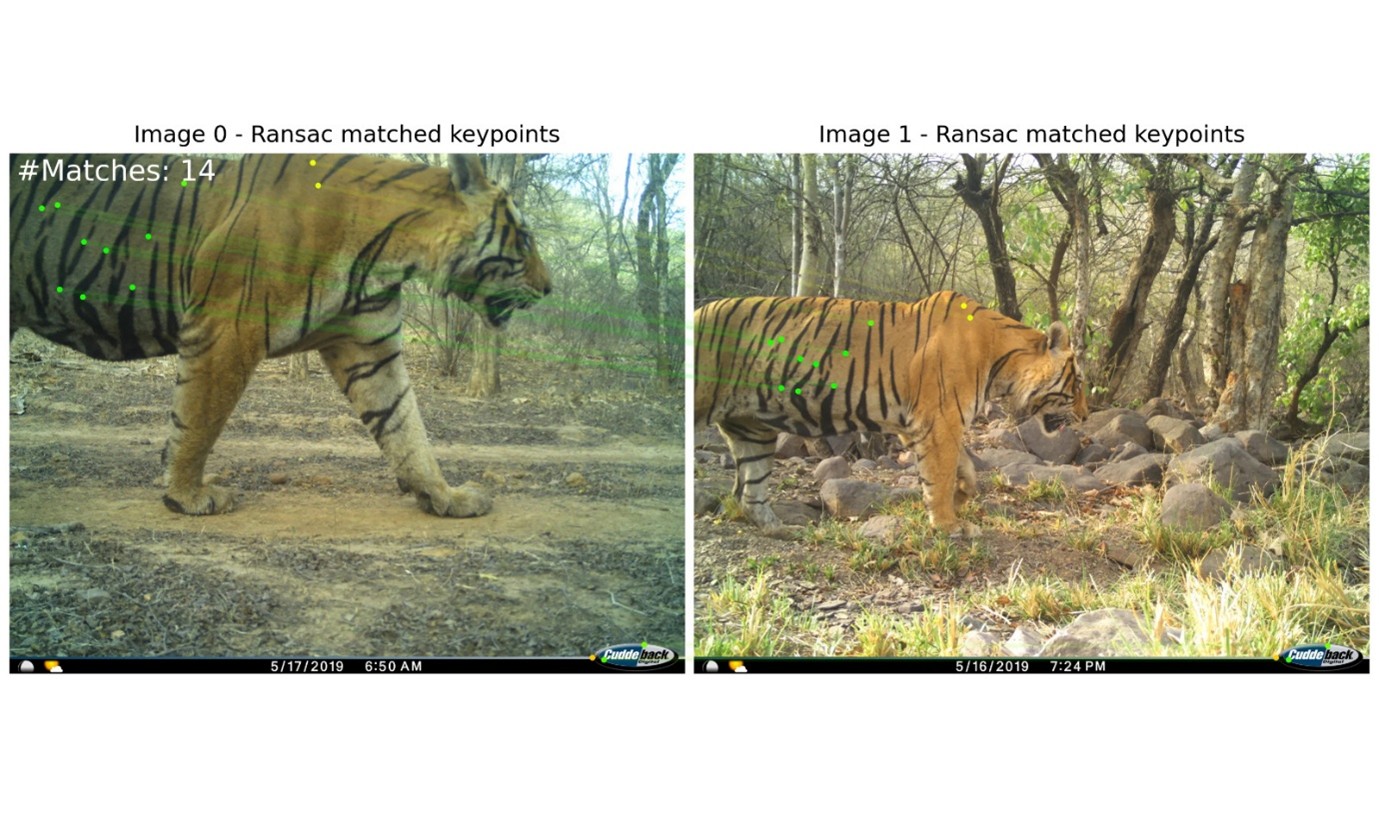
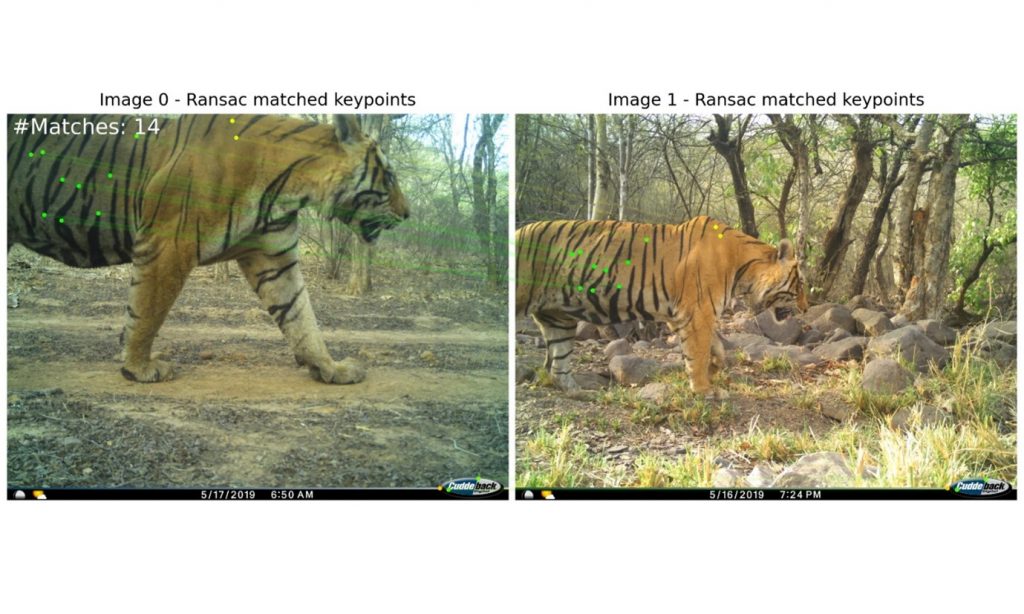
Figure 1 IBC Associates have been working on methods using Artificial Intelligence with camera traps to identify individual tigers in India. Copyright Arpit Deomurari (2025).
A model in practice: Red Sea Global terrestrial baseline (2025)
Red Sea Global (RSG) resorts in Saudi Arabia worked with global researchers to identify 11 Key Biodiversity Areas (KBAs) across 120 terrestrial sites along the Red Sea coast, aligning with International Union of Conservation and Nature (IUCN) KBA criteria and feeding directly into master planning and net conservation gain goals. This is baseline work that can change investment decisions, prioritizing sensitive areas, informing visitor flows, and aligning with biodiversity net gain initiatives by 20303. RSG had already conducted one of the largest company-led environmental surveys on its coastline, which serves as the ecological starting point for long-term monitoring and impact management.
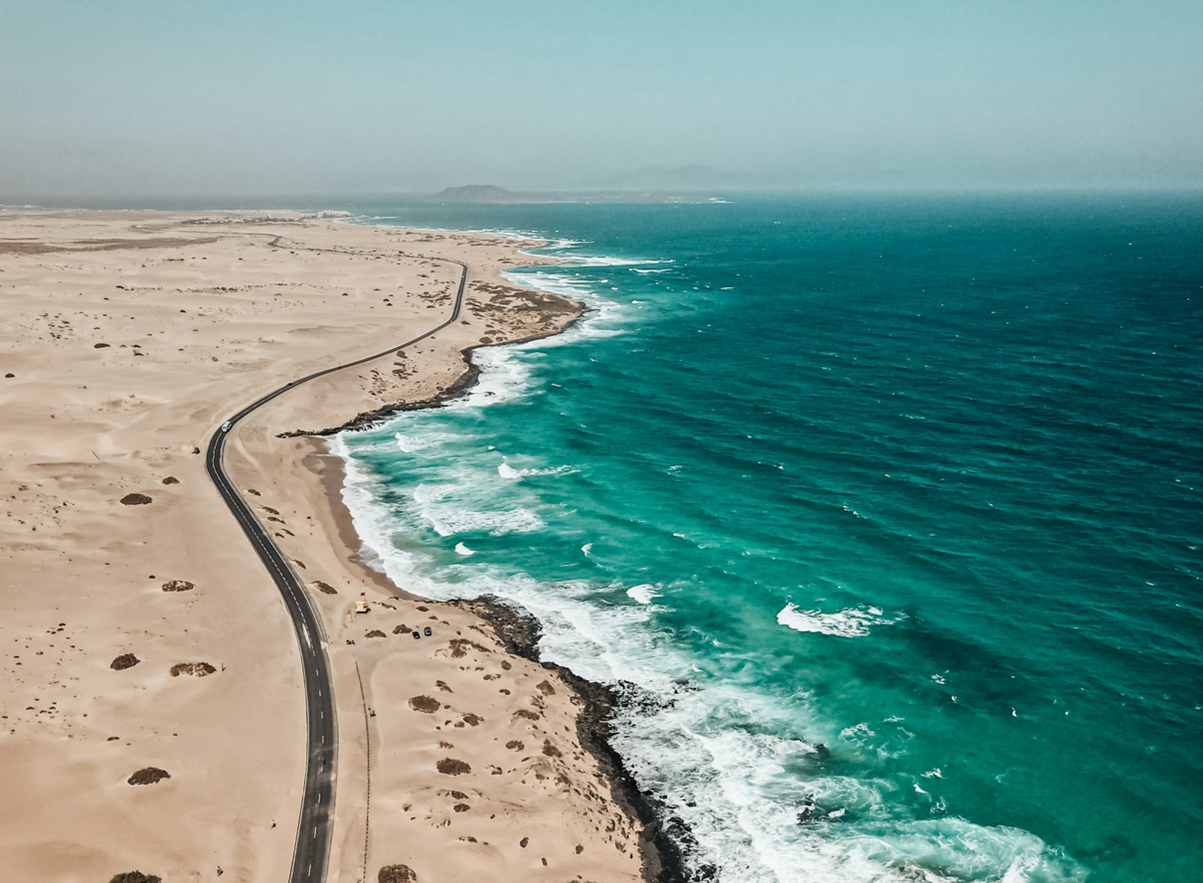
Figure 2 Red Sea Coastline, Photo by Dario Mueller on Unsplash
Baselines make or break Nature-based Solutions
High-integrity Nature based Solutions (NbS) (mangroves, peatlands, watershed restoration) depend on baselines that capture biodiversity co-benefits, community outcomes, and trade-offs. The IUCN Global Standard for NbS stresses safeguards and evidence of ecological outcomes—which hinge on a transparent baseline and monitoring plan. Recent IUCN case studies (including Indonesia’s Kubu Raya) show that projects applying the Standard are more likely to deliver measurable biodiversity gains and withstand scrutiny4.
At the same time, the finance gap for NbS remains large: United Nations Environment Program (UNEP) estimates we need to more than double annual flows (to ~$384 billion USD/year by 2025) to meet climate and biodiversity targets—so funders are demanding credible baselines to ensure integrity and outcomes5.
Standards, disclosure & nature markets: the baseline is your audit trail
As reporting expectations tighten (especially through initiatives such as TNFD), baselines serve as the audit trail for claims and targets. To support this, organisations like Global Reporting Initiative (GRI) and ISO are aiming to harmonize methods and reduce friction for cross-border comparability, vital if you’re working across landscapes and supply chains. The conservation and finance community are also mapping assessment tools and frameworks to user needs in nature markets; WWF’s 2025 landscape study assesses how well different tools meet attributes for nature finance, underscoring the need for fit-for-purpose baselines6.
For new tools like Biodiversity Credits and net gain claims, the baseline defines additionality and counterfactuals/alternative scenarios, for example, what would have happened without the project. No robust baseline, no credible credit.
Open data sets and Artificial Intelligence
In 2025, we also have access to lots of open data sets, however biodiversity data is fragmented across a range of different platforms run by NGOs, Governments and private projects. Open platforms such as ENCORE (https://encorenature.org) and initiatives by Global Canopy, UNEP FI and UNEP-WCMC (collectively known as the ‘Encore Partnership’) may change this by providing shared geolocation and natural capital datasets for risk assessment and finance7. Consolidating data, enables comparability across projects and regions; reduces duplication and costs; supports nature finance by giving investors transparent, and standardized data for risk and impact analysis.

Figure 3 IBC has been developing complex databases, linking third-party digital geospatial data to measure biodiversity impacts across company portfolios.
Artificial intelligence (AI) or Machine Learning can help support closing knowledge gaps by processing massive datasets (e.g., aerial/satellite data, eDNA data, acoustic data, camera trap data to identify species, map distributions, and even infer species interactions like food webs, something too complex to undertake at scale.AI-driven models can forecast ecosystem tipping points, invasive species distribution or deforestation risk, shifting conservation from reactive to preventive. WWF’s Forest Foresight project has already predicted deforestation with 80% accuracy8. Targeted use of AI can result in cost savings, for example by identifying species captured via acoustic recordings or camera traps, reducing manual labour and speeding up reporting.
Conclusion
As the UNEP Global Biodiversity Framework (UNGBF) notes, a 2025-ready baseline de-risks projects, elevates credibility in disclosures and nature markets, and enables adaptive management in a volatile climate. It’s the foundation for nature-positive action—not just a permit requirement. Start with clear scope and standards, embrace mixed-method monitoring, and treat the baseline as always-on infrastructure for better decisions.
References
- International Standards Organization (2025) Biodiversity. Accessed at: https://www.iso.org/biodiversity
- UNEP (2025) Global Biodiversity Framework (GBF). Accessed at: https://www.unep.org/interactives/biodiversity-sdgs-tool/global-biodiversity-framework.html
- Red Sea Global (2025) Terrestrial Baseline 2025. Accessed at: https://www.redseaglobal.com/responsible-development/terrestrial-baseline-assessment-2025
- IUCN (2025) Applying the IUCN Global Standard for Nature-based SolutionsTM https://portals.iucn.org/library/sites/library/files/documents/2025-022-En.pdf
- UNEP (2025) Doubling finance flows into nature-based solutions by 2025 to deal with global crises. Accessed at: https://www.unep.org/news-and-stories/press-release/doubling-finance-flows-nature-based-solutions-2025-deal-global
- WWF – Naturaleon (2025) The Biodiversity Impact Assessment Framework: place in the biodiversity assessment landscape. https://www.wwf.ch/sites/default/files/doc-2025-06/BIAF%20landscape%20study%20V2_FINAL%20%282%29.pdf
- Encore Nature (2025) Exploring Natural Capital Opportunities, Risks and Exposure. Accessed at: https://encorenature.org/en
- Institute of Management Development (2025) Algorithms and ecosystems: AI’s role in biodiversity conservation. Accessed at: https://www.imd.org/ibyimd/sustainability/algorithms-and-ecosystems/
GenAI (Microsoft Copilot, ChatGPT5) was used to support development of this article. Factual information throughout was verified manually to ensure validity.
Ends.